

detail
home
|
detail

detail
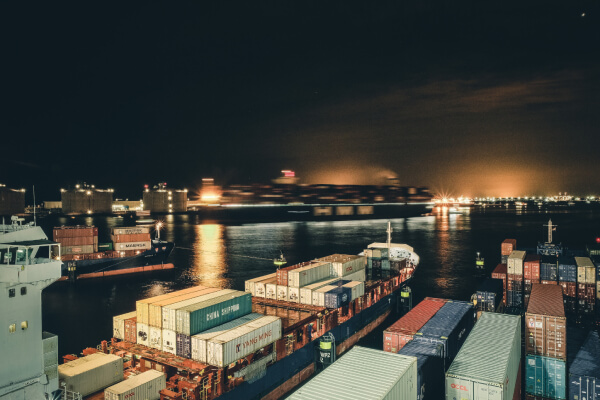
The statement "The opening of new cargo transportation in the global market" can be interpreted from multiple dimensions. It may refer to the application and promotion of new transportation routes, models, technologies or policies on a global scale, aiming to enhance the efficiency of cargo circulation, reduce costs or expand market coverage. The following analysis is conducted from aspects such as emerging trends, core driving factors, typical cases and impacts:
I. Emerging Trends in Global Cargo Transportation at Present
The opening of new transportation routes
Commercialization of the Arctic shipping Route
With the melting of the Arctic ice, the navigation period of the Arctic shipping routes (such as the Northern Sea Route) has been extended, and the voyage has been shortened by about 30% compared with the traditional Suez/Panama route. For instance, in 2023, China and Russia jointly launched the "Arctic - Europe" container shipping route. The voyage was shortened by 12 days compared with that via the Suez Canal, and the cost was reduced by 20%.
Construction of Regional Economic Corridors
New China-Europe Railway Express routes: In 2024, a direct train service from Xi 'an to Budapest will be added, covering the inland countries of Central and Eastern Europe and promoting trade facilitation along the Belt and Road.
The logistics network of the African Continental Free Trade Area (AfCFTA) : The planned Pan-African railway and highway network is gradually being implemented, such as the Lagos-Kano Railway (Nigeria), which enhances the efficiency of land transportation of goods in West Africa.
2. Innovation in transportation mode
Multimodal transport integration
Integrate various transportation methods such as sea transportation, railway transportation, road transportation and air transportation, and achieve "door-to-door" transportation through a single contract. For instance, Maersk has launched the "Ocean+Rail" product, which transports goods from Asia to Europe by sea to Rotterdam and then distributes them to the European interior by rail. The delivery time is 5 days faster than pure sea transportation, and the cost is 40% lower than air transportation.
Unmanned aerial vehicle and unmanned ship transportation
Drones are used for the delivery of medical supplies in remote areas (such as Zipline's drone network in Rwanda, Africa, which delivers emergency medicines within 30 minutes).
Pilot unmanned container ship: The "AutoShip" unmanned ship, jointly developed by NYK and Mitsubishi Heavy Industries, is planned to be put into operation on the Asia-North America route in 2025, reducing labor costs and enhancing safety.
3. Digitalization and intelligence upgrade
Application of Blockchain Technology
The electronic bill of lading (eBL) based on blockchain realizes the electronicization of cross-border logistics documents and shortens the customs clearance time. For instance, the TradeLens platform, a collaboration between DBS Bank and Maersk, has reduced the customs clearance time from Singapore to the Netherlands from 48 hours to 4 hours.
AI intelligent scheduling
Huolala International Edition optimizes cross-border transportation routes through AI algorithms to reduce the rate of empty trips. Data shows that the empty running rate of its Southeast Asian routes has dropped from 35% to 22%, and the transportation cost has decreased by 18%.
4. Green transportation solutions
Popularization of new energy transportation vehicles
Electric vans: Amazon plans to put 100,000 Rivian electric vans into operation by 2030, covering major cities around the world for delivery.
Hydrogen-powered ships: The hydrogen-fueled container ship "Eagle Ace" developed by Kawasaki Heavy Industries of Japan has been put into trial operation, with carbon emissions reduced by 90%.
Carbon-neutral logistics services
DHL has launched the "GoGreen Plus" service. By purchasing carbon credits to offset transportation emissions, customers can obtain carbon neutrality certification.
Ii. Core Driving Factors
Technological innovation
5G and the Internet of Things (IoT) drive intelligent tracking (such as real-time monitoring of cargo temperature and location) and predictive maintenance (such as early warning of ship engine failures).
3D printing technology realizes "origin as market", reducing the need for long-distance transportation (such as local production of components).
Policies and regional cooperation
The Regional Comprehensive Economic Partnership (RCEP) simplifies customs clearance procedures among member states and promotes logistics integration in the Asia-Pacific region.
The EU's "Green Deal" mandates a 90% reduction in carbon emissions from the logistics industry by 2030, compelling enterprises to adopt clean transportation methods.
Changes in market demand
The explosive growth of cross-border e-commerce: In 2023, the global cross-border e-commerce transaction volume reached 2.3 trillion US dollars, driving a sharp increase in the demand for "door-to-door" small package logistics (for instance, Cainiao International Logistics covers over 200 countries and regions).
High-value goods transportation: Industries such as semiconductors and biomedicine rely on rapid transportation, giving rise to customized services of "air + cold chain" (for instance, FedEx's "temperature-controlled logistics" covers 40 hubs worldwide).
Supply chain resilience demand
Geopolitical conflicts (such as the Russia-Ukraine war) have prompted enterprises to diversify their transportation routes and avoid the risks of a single channel. For instance, in 2022, the volume of the West Corridor of the China-Europe Railway Express (via Kazakhstan) increased by 67% year-on-year, becoming the mainstream choice.
Iii. Typical Cases: Global Practices of New Transportation Models
The Arctic shipping Route: Jointly developed by China and Russia
Route: Qingdao Port, China → Bering Strait → Murmansk Port, Russia → Europe
Advantages: The voyage is approximately 4,000 nautical miles shorter than traditional routes, avoiding the geopolitical risks of the Malacca/Suez Canal.
Challenge: Ice-class ships are costly (30% more expensive than ordinary ships), and it is necessary for China and Russia to cooperate in building an icebreaker escort system.
2. Drone logistics: Zipline's African layout
Model: Establish drone hubs in countries such as Rwanda and Ghana, and deliver medical supplies (such as vaccines and blood) through fixed-wing drones.
Data: The single flight distance can reach 160 kilometers, the cost is 80% lower than that of road transportation, and over 2 million deliveries have been completed.
3. Hydrogen-powered ships: "Eagle Ace" of Kawasaki Heavy Industries, Japan
Technology: Equipped with a liquid hydrogen fuel engine, it has a load capacity of 1,200 tons and a range of approximately 3,000 nautical miles.
Significance: To provide a demonstration for the decarbonization of ocean transportation and plan to achieve large-scale operation by 2030.
Iv. Impact on the Global Market
1. Economic efficiency improvement
New routes and models reduce logistics costs and promote regional trade growth. For instance, the China-Europe Railway Express has reduced the logistics cost from China to Europe by 70% compared to air freight, and has driven a 25% increase in China's exports to Central and Eastern Europe (data from 2023).
Developing countries enhance the ability of small and medium-sized enterprises to participate in the global supply chain through digital logistics platforms (such as Loadshare in India), narrowing the "logistics gap".
2. Reshaping of the geo-economic landscape
The Arctic shipping routes may enhance the logistics hub status of Russia and Nordic countries and challenge the traditional advantages of Singapore and Rotterdam.
The construction of local logistics networks in Africa (such as the new Port of Lagos) is expected to increase the global trade share of the African continent from 2% to over 5%.
3. Environmental benefits have emerged
Green transportation models contribute to the global carbon reduction goals. According to the prediction of the International Energy Agency (IEA), new energy transportation vehicles could reduce carbon emissions in the logistics industry by 40% by 2030.
Recycling Packaging and shared logistics (such as Amazon 's Frustration-Free Packaging) reduce waste, and the global use rate of biodegradable packaging is expected to reach 35% by 2025.
4. Employment and Skills Transformation
Intelligent transportation has given rise to new occupations (such as drone operators and logistics data analysts), but it may replace traditional positions such as drivers and warehouse sorters (attention should be paid to labor retraining).
V. Challenges and Risks
Technical barrier
The airworthiness standards for unmanned aerial vehicles (UAVs) and unmanned ships have not yet been globally unified. Cross-national/regional operations need to coordinate regulations (such as the differences in UAV certification between the EU EASA and the US FAA).
Insufficient investment in infrastructure
The lack of modern ports and railways in regions such as Africa and Southeast Asia restricts the efficiency of new lines (for instance, the Lagos Port in Nigeria has a ship detention rate as high as 20% due to outdated equipment).
Cost pressure
The initial investment in new energy ships and unmanned aerial vehicles is high, making it difficult for small and medium-sized enterprises to afford (for example, the cost of hydrogen fuel ships is 2 to 3 times that of traditional ships).
Geopolitical risk
Militarized competition in the Arctic shipping routes (such as Russia's deployment of missile systems in the Arctic) may affect the security of commercial operations.
Vi. Future Outlook
Technological integration is accelerating.
Drones work in coordination with self-driving trucks (for example, in the "last mile" delivery, trucks transport to suburban hubs, and then drones complete door-to-door deliveries).
The metaverse platform is used for logistics planning (such as virtual simulation to optimize warehouse layout and simulation of multimodal transport routes).
Deepening of policy synergy
A globally unified unmanned aerial vehicle (UAV) logistics regulation is expected to be introduced (such as the "Global UAV Traffic Management System" promoted by the International Civil Aviation Organization (ICAO) of the United Nations).
Carbon tariff policies (such as the EU's CBAM) will mandate logistics enterprises to disclose their carbon emissions, driving the popularization of green technologies.
The rise of emerging markets
Southeast Asia, the Middle East and Africa have become experimental fields for logistics innovation (for example, Indonesia's "Global Marine Fulcrum" strategy promotes the upgrading of ports).
The opening of new cargo transportation models and routes is essentially the product of the interweaving of globalization and technological revolution. Its core lies in building a more resilient and sustainable global supply chain through efficiency improvement and cost optimization. Enterprises need to grasp technological trends (such as digitalization and greening), pay attention to regional policy differences at the same time, and seek a balance between risks and opportunities to adapt to the competitive landscape of the "new logistics era".